
Early identification of high-risk patients can lead to earlier screening, more personalized care, and improved breast cancer detection. Learn how breast imaging departments can establish effective protocols for screening patients under age 40.Written by: Emily Goetz, MHS, R.T.(R)(M)(ARRT)
Why Breast Cancer Risk Assessment Matters Before Age 40
One of the most valuable attributes of mammographers is our strong patient-centered approach and deep understanding of screening guidelines. We are well-versed in the American College of Radiology (ACR) recommendations, which state that average-risk individuals should begin screening mammography at age 40. We also recognize that current ACR guidance recommends a personalized risk assessment between ages 25 and 40, which helps identify individuals who may be considered high-risk based on specific clinical criteria.
But this raises an important question:
Who Should Receive Screening Mammography Before Age 40?
For patients identified as having an elevated lifetime risk of breast cancer, earlier screening may be appropriate. To support these patients effectively, breast imaging departments should establish clear, consistent protocols that help staff navigate screening eligibility and care pathways.
Building a High-Risk Screening Program: Three Key Components
Successfully implementing a screening program for high-risk patients under 40 requires a coordinated approach built on three foundational elements:
- Collaboration — Develop strong partnerships with high-risk breast providers, radiologists, and breast imaging leadership
- Communication — Establish clear, consistent communication among ordering providers, high-risk breast specialists, radiologists, technologists, and breast imaging leadership.
- Education — Stay current with evolving breast cancer screening guidelines and learn from health systems that have successfully implemented high-risk screening pathways.
Collaboration & Collaboration: Creating a Screening Mammography Protocol for Patients Under 40
A formal "screening under 40" protocol can help eliminate uncertainty and improve consistency across the department.
Ideally, this process should involve ordering providers, high-risk breast specialists, radiologists, and breast imaging leadership working together to define clear criteria. For example, screening eligibility under age 40 may depend on documented elevated risk status and an appropriate provider order within a structured imaging pathway.
Clear communication between all stakeholders is essential to ensure that patients are directed to the most appropriate imaging strategy based on individualized risk.
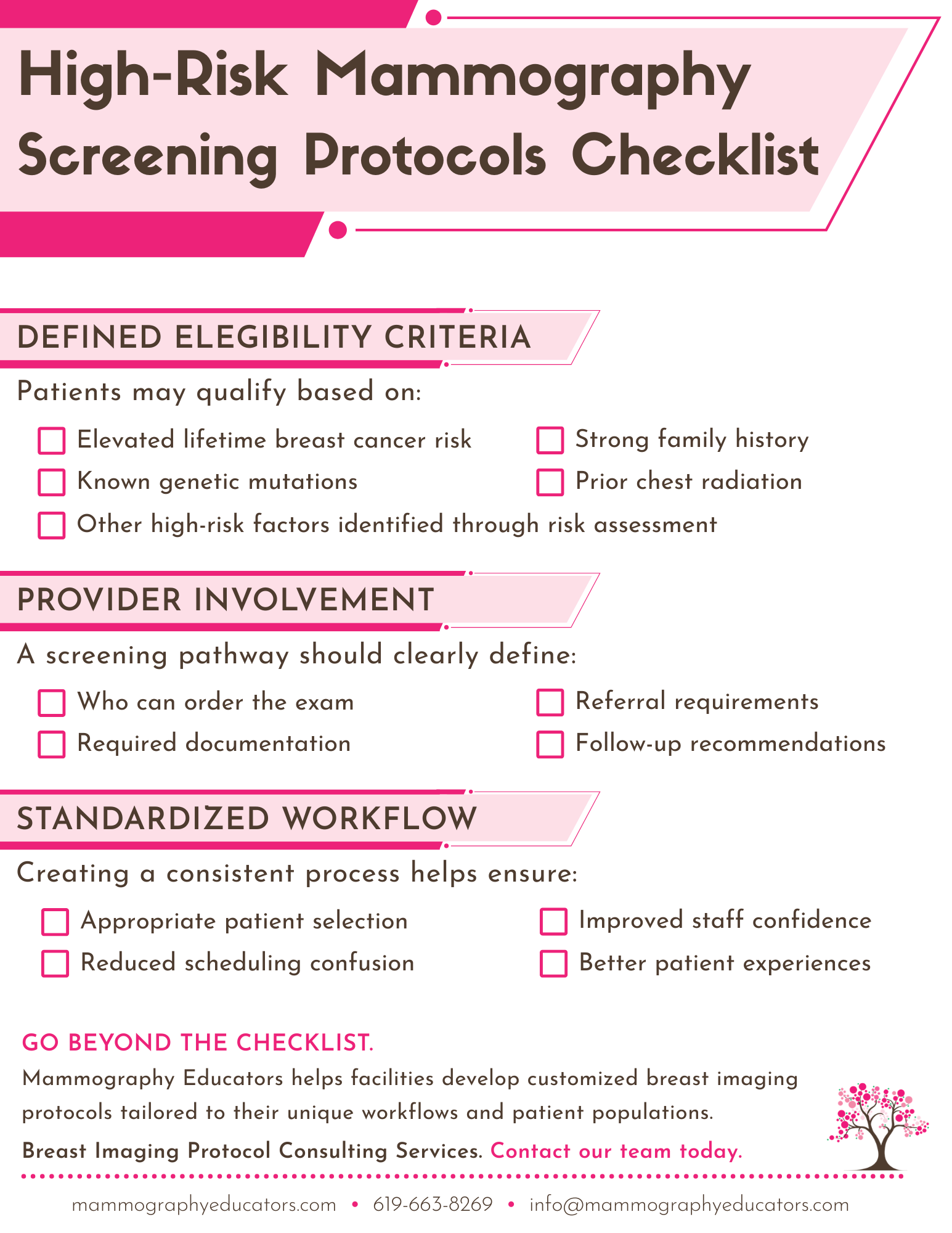
[Downloadable Resource: High-Risk Mammography Screening Protocols Checklist]
The Role of High-Risk Breast Clinics: Understanding the “Why” Behind Screening Under 40
Breast imaging departments do not have to manage high-risk screening alone.
High-risk providers such as Mary McCarthy, NP (University of Kansas Health System) and Simone Culver, PA (Ascension Via Christi) emphasize that screening decisions in younger patients are typically driven by structured risk evaluation pathways.
The goal of screening before age 40 is not simply to start imaging earlier, but to ensure that patients with elevated breast cancer risk receive the appropriate surveillance strategy based on their individual risk profile.

Who Should Receive Screening Mammography Before Age 40?
In practice, patients are typically referred to high-risk clinics for a comprehensive, formal risk assessment. Risk stratification helps determine appropriate imaging strategies, which may include screening mammography and/or supplemental imaging modalities depending on individual risk and available resources (McCarthy & Culver, 2026).
These structured care pathways improve clarity for both providers and patients while supporting more confident, informed decision-making.
Why Breast Health Navigators Are Essential
One often-overlooked component of a successful high-risk screening program is the Breast Health Navigator team. Breast Health Navigators can help:
- Coordinate referrals
- Connect patients with high-risk clinics
- Explain screening recommendations
- Improve follow-up compliance
- Reduce patient anxiety
By serving as a bridge between imaging services and specialty care, nurse navigators help ensure patients do not fall through the cracks.
Thoughts and Practical Tips: How Mammographers Can Support High-Risk Patients
Mammographers play a critical role in identifying opportunities to improve patient care.
As technologists, it is important to feel empowered to ask questions and engage in dialogue with breast imaging leadership. These conversations help shape effective protocols for patients under 40 who may meet high-risk screening criteria.

Most importantly, remember that many patients arrive for screening feeling anxious or uncertain. A knowledgeable and compassionate technologist can make a significant difference in a patient's experience and confidence in their care.
The Future of Personalized Breast Cancer Screening
Breast cancer screening is moving beyond age-based recommendations toward individualized, risk-based care.
By establishing clear protocols, strengthening partnerships with high-risk providers, and investing in staff education, breast imaging departments can create pathways that support earlier detection and improved outcomes for patients who may benefit from screening before age 40.
As breast cancer screening continues to evolve toward a more personalized approach, mammographers remain at the forefront of patient care. Through education, collaboration, and advocacy, technologists can help ensure that high-risk patients are identified early and connected with the screening resources they need, ultimately supporting earlier detection and improved outcomes.
Beyond the Checklist: Build Protocols That Work for Your Facility
Whether you're establishing a high-risk screening pathway or updating existing breast imaging protocols, our team can help you create clear, evidence-based procedures that support both staff and patients.
Let's create Breast Imaging Protocols that work for your department.
References:
American College of Radiology. (2023). New ACR breast cancer screening guidelines call for earlier screening for high-risk women. Retrieved from https://www.acr.org/News-and-Publications/Media-Center/2023/New-ACR-Breast-Cancer-Screening-Guidelines-call-for-earlier-screening-for-high-risk-women.
Culver, S. (2026, April 28). Personal interview.
McCarthy M. Personal interview. The University of Kansas Health System. April 26, 2026.
DenseBreast-info, Inc. FDA National Dense Breast Reporting. Available at: https://densebreast-info.org/legislative-information/fda-national-dense-breast-reporting/.